Unlocking SMB adoption through usage-based publishing credits.
Designing a scalable credit-based publishing workflow that reduced pricing barriers and expanded enterprise product accessibility.
Focus: Monetization workflow, enterprise systems UX, trust-sensitive publishing decisions.
Company
NielsenIQ
Product
Configuration Manager
Role
Lead UX Designer
Timeline
2025
Executive Summary.
The Context
Configuration Manager is a paid add-on within NielsenIQ’s Discover ecosystem that enables clients to customize their datasets through capabilities such as custom characteristics, global characteristics, and drill paths.
The Problem
Despite strong product value, its pricing structure created a high barrier to adoption for smaller and mid-sized clients. The existing floor price assumed unlimited publishing of data components, increasing NielsenIQ’s cloud operational costs and driving up the base price.
The Barrier
This made the offering cost-prohibitive for SMB clients and limited market expansion.
The Solution
To address this, I led the design of a credit-based publishing model that aligned pricing with actual usage, lowered the entry barrier, and improved accessibility for smaller clients.
Product Context.
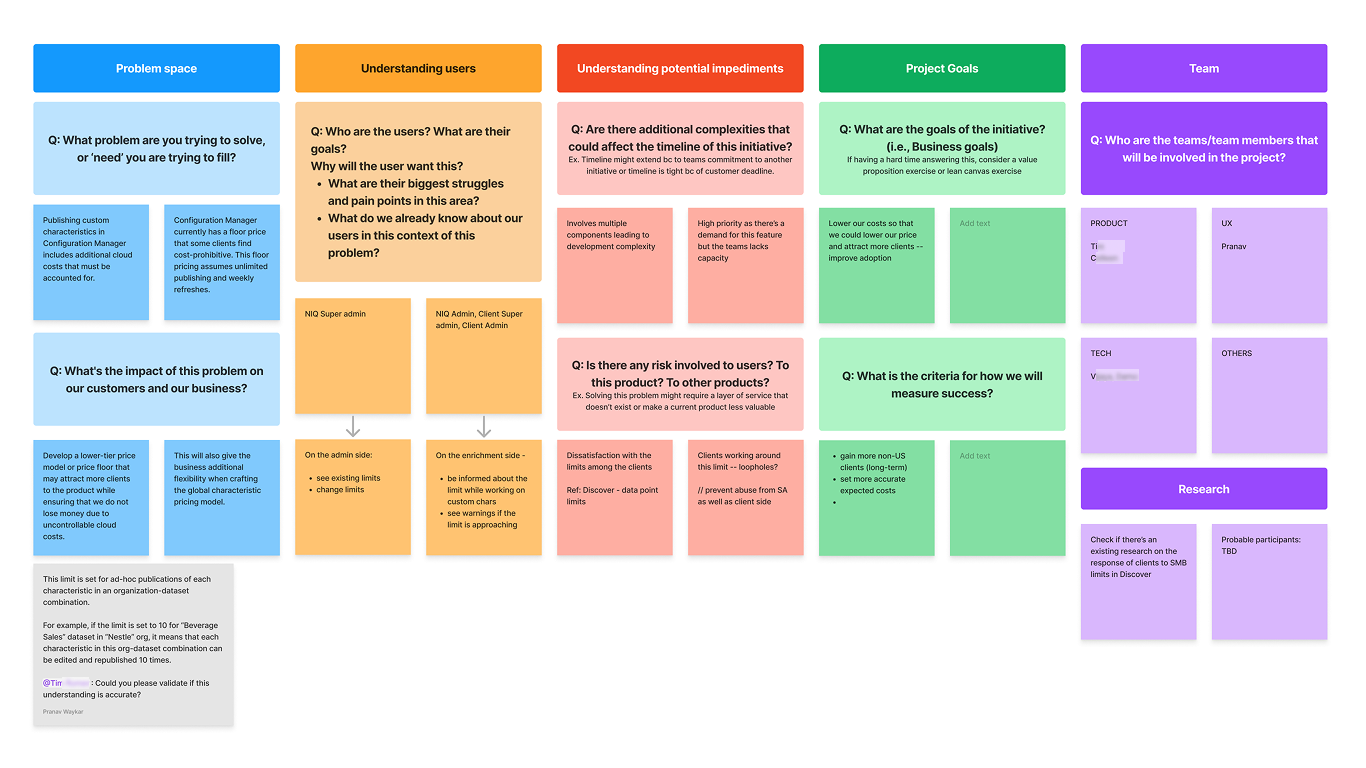
Publishing custom data components incurred cloud costs for NielsenIQ.
Because the previous pricing model assumed unlimited publishing, the minimum package price remained high, restricting adoption among smaller clients despite clear demand.
The opportunity was to redesign this as a flexible, usage-based system that balanced business sustainability with user clarity and trust.
Role & Ownership.
As Lead UX Designer, I drove the end-to-end experience design for introducing credits into the publishing workflow. My responsibilities included:
- —Translating pricing logic into user workflows.
- —Designing trust-sensitive decision points.
- —Mapping edge cases and exception states.
- —Collaborating closely with product leadership and engineering.
- —Validating implementation through UXQA.
The Process.
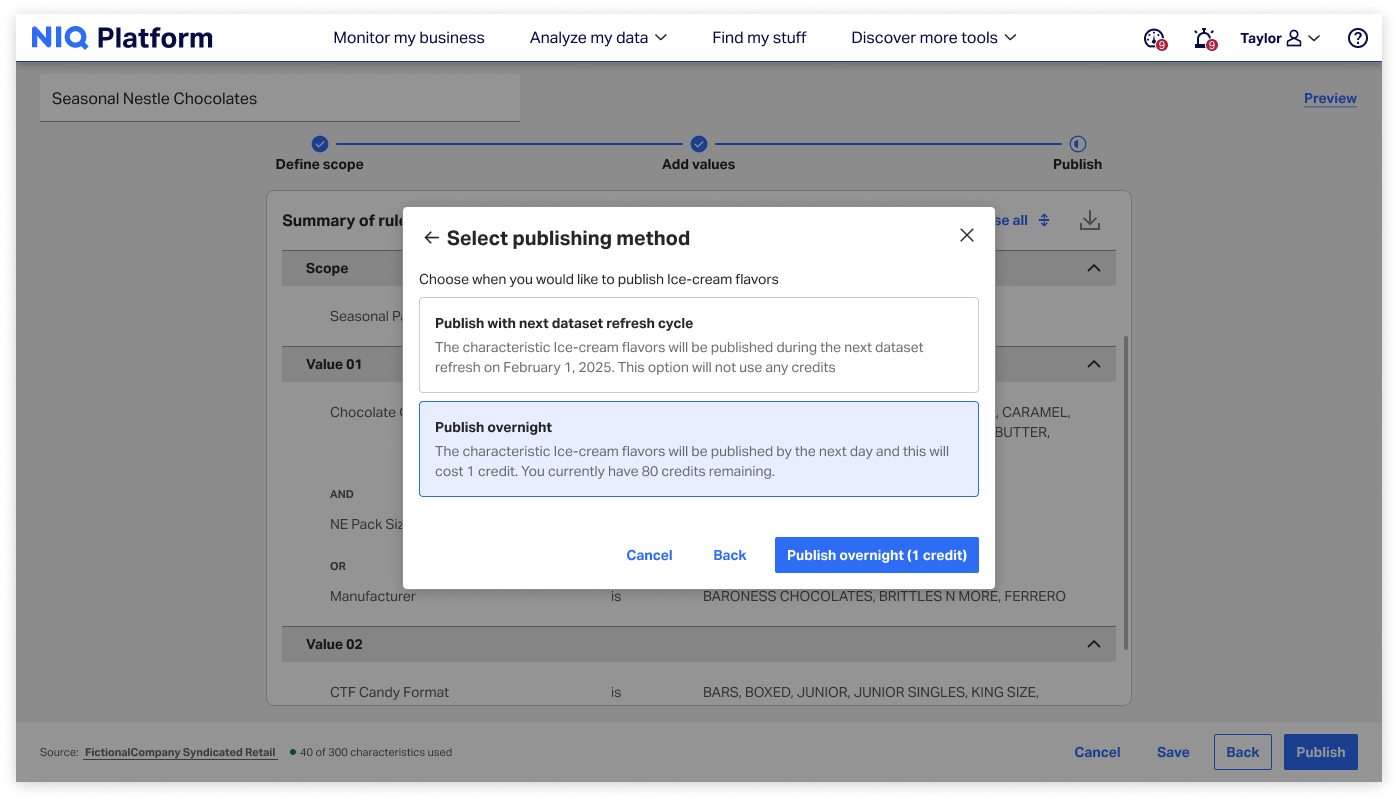
- —Publish overnight (consumes 1 credit)
- —Publish with next dataset refresh (no credit required)
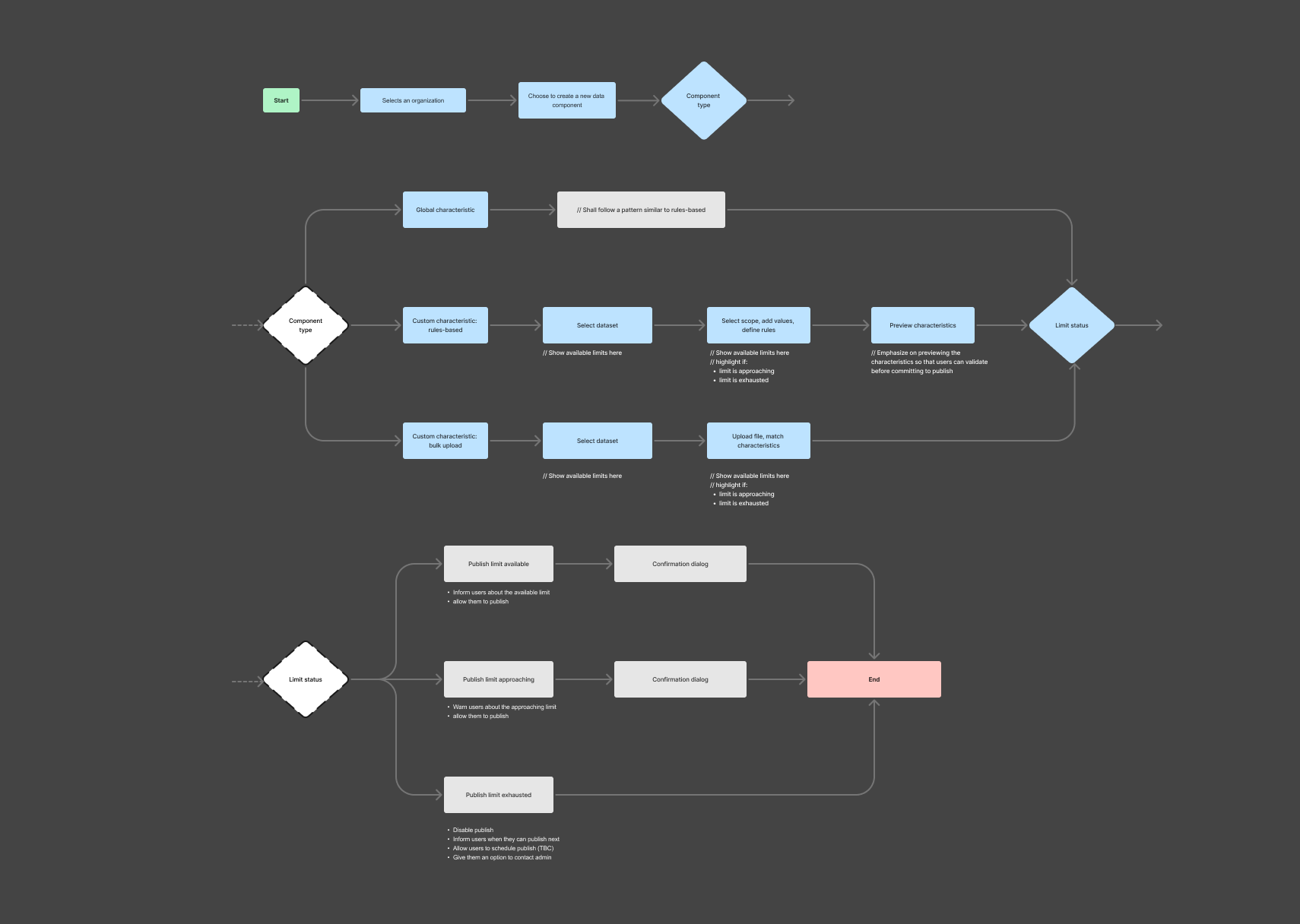
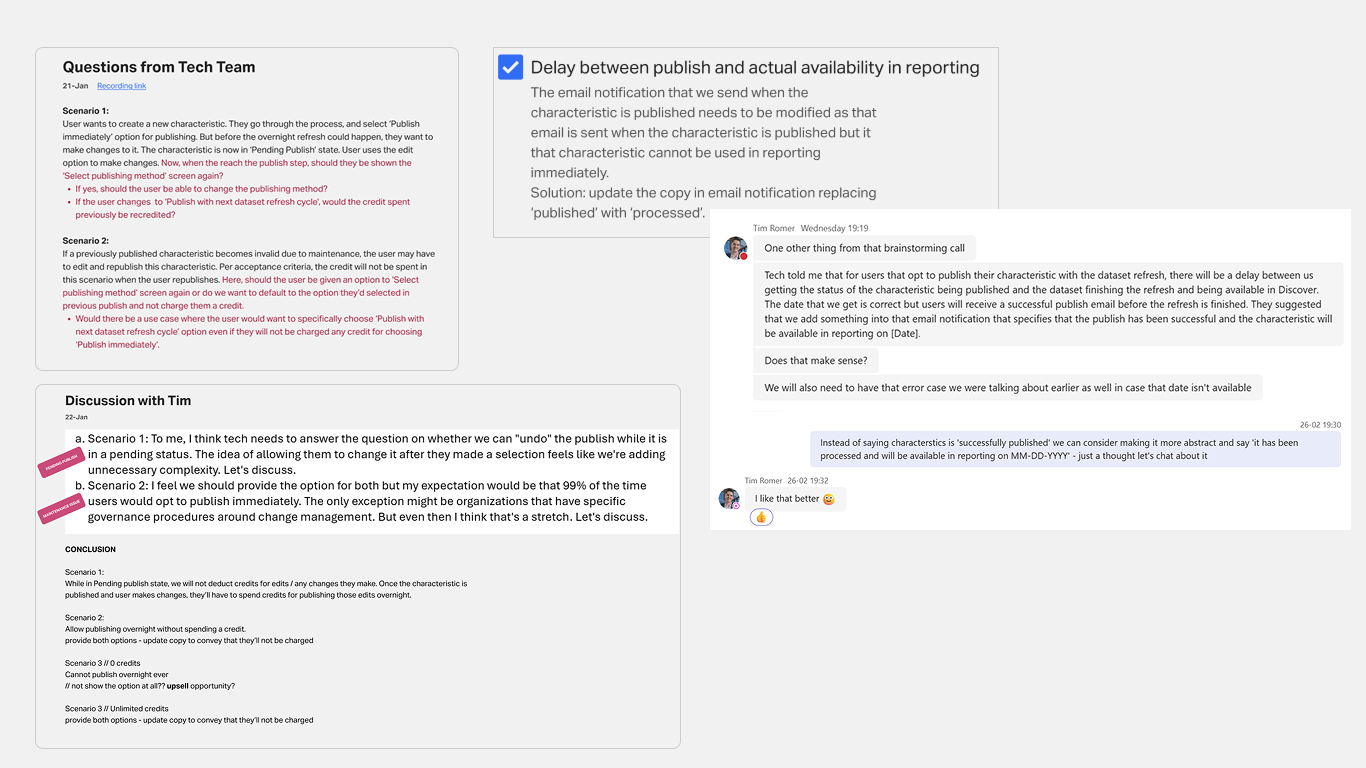
- —Zero-credit states and unlimited-credit contracts.
- —Pending publish edits and recursive dependencies.
- —Failed publishes, credit restoration, and reporting availability delays.
Key Decisions & Trade-offs.
Dynamic CTAs
Decision: Introduced a dynamic CTA that reflected the selected publishing method (e.g., "Publish immediately (1 credit)" vs "Schedule publish for [date]").
Why: This reduced ambiguity at the point of commitment and improved user confidence before spending a credit.
Balancing Friction & Clarity
Trade-off: I intentionally added an additional decision step to the publish flow.
Why: To ensure completely informed decision-making for a cost-sensitive action, while preserving the rest of the familiar workflow.
Final Solution.
Trust-focused Modal
The final solution introduced a trust-focused publishing decision modal that clearly communicated publishing timeline, credit cost, remaining credits, and the consequence of the action. The workflow preserved existing behavior while making the cost implications explicit and easy to understand.
01 / Initial State
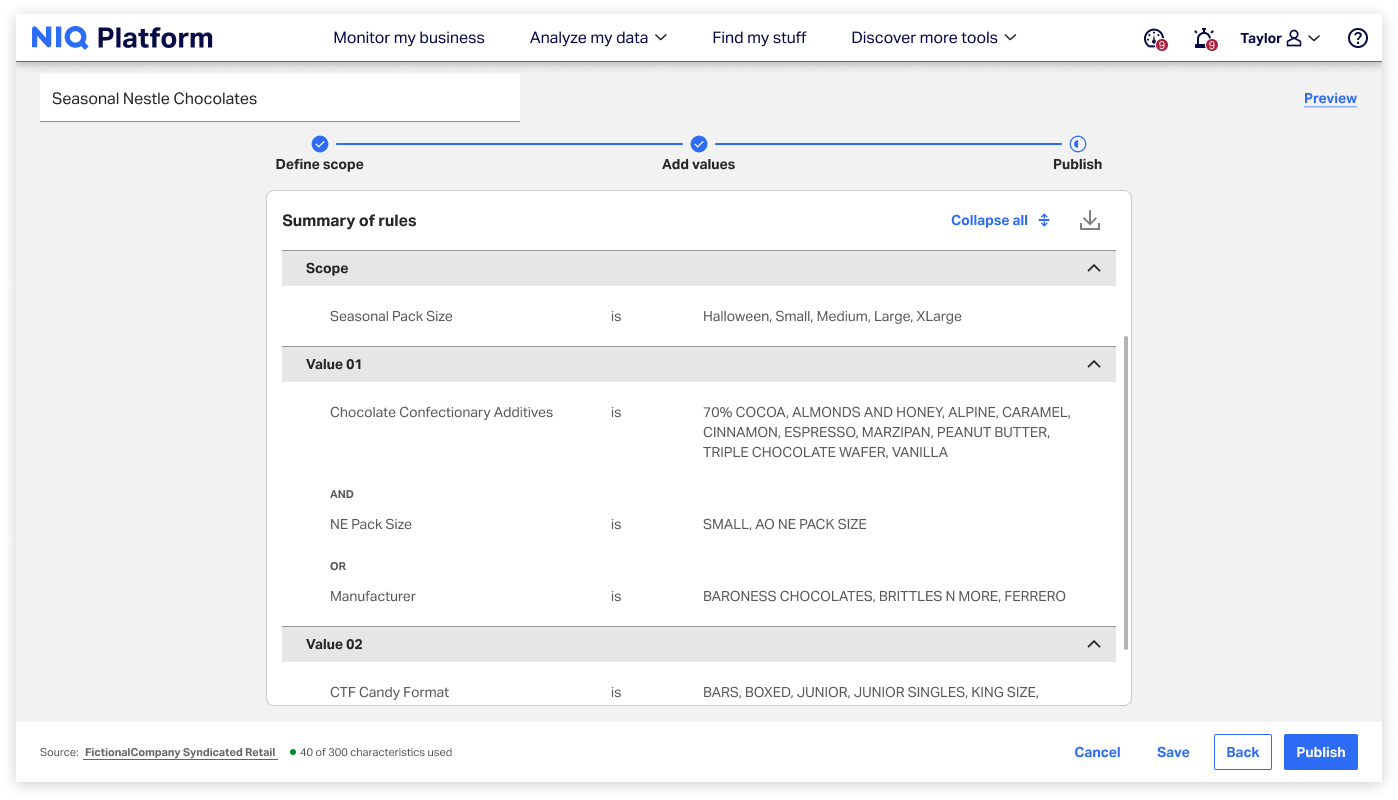
02 / Decision Point
03 / Success Feedback
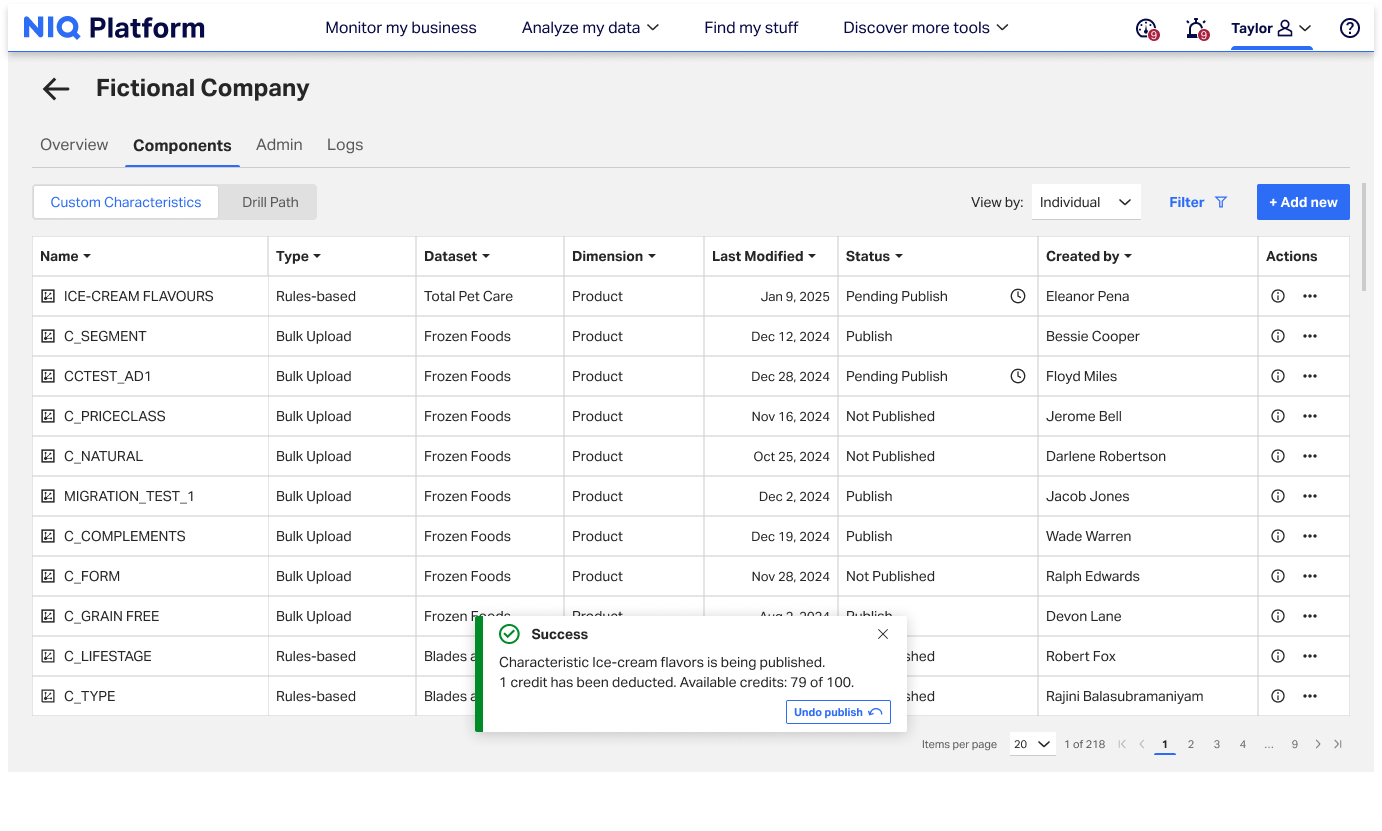
Outcomes & Impact.
The solution was successfully shipped to production. Initial stakeholder feedback indicated an uptick in adoption among smaller client segments that were previously priced out of the Configuration Manager offering. Quantitative business metrics are currently being validated with the sales engineering team.
Reflection.
What initially appeared to be a straightforward feature quickly revealed itself as a systems design problem with significant business and technical complexity.
My biggest learning was that simple, trustworthy experiences often require deep rigor in edge-case thinking and early engineering collaboration.
This project strengthened my approach to designing monetization workflows, trust-sensitive decision points, and scalable enterprise systems.